


What is bone remodeling?
Bone remodeling is the body’s continuous process of replacing older bone tissue with new bone. Specialized cells remove small areas of bone while other cells create new bone in their place. This process occurs throughout the skeleton and helps bones respond to pressure, repair themselves and remain healthy.
In orthodontics, remodeling occurs primarily in the alveolar bone—the part of the jawbone surrounding and supporting the roots of the teeth. This living tissue can gradually change in response to the controlled forces produced by orthodontic appliances.
How does bone remodeling move teeth?
Braces and Invisalign move teeth by applying gentle, consistent pressure. That pressure is detected by the periodontal ligament between each tooth root and its surrounding bone.
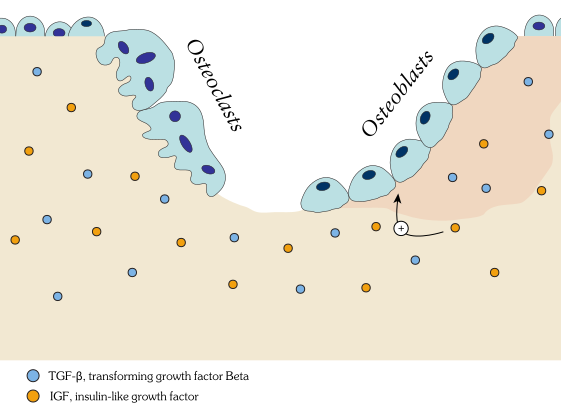
On the side toward which the tooth is moving, bone-removing cells called osteoclasts create space around the root. On the opposite side, bone-building cells called osteoblasts form new bone to support the tooth as it changes position.
These coordinated changes allow the entire tooth—including its root—to move gradually through the jawbone.
Why does orthodontic tooth movement take time?
Bone remodeling is a biological process, so it cannot happen instantly. The surrounding tissues need time to respond to pressure, remove bone where space is needed and form new support around each tooth.
Using excessive force does not necessarily make this process happen faster. In fact, too much pressure can interfere with normal tissue response and increase discomfort. Orthodontists carefully plan the direction and amount of force used throughout treatment.
Learn more in Understanding Tooth Movement: The Science Behind Effective Braces Treatment.
Do braces and Invisalign remodel bone differently?
Braces and Invisalign use different appliances, but both depend on the same underlying biology. Braces transmit force through brackets and archwires, while clear aligners use a series of customized trays and, when needed, tooth-colored attachments.
The type of movement, treatment plan and patient consistency can affect how force is delivered. However, successful treatment with either method requires a healthy response from the periodontal ligament and surrounding bone.
What happens to the bone after treatment?
Bone remodeling continues after active orthodontic treatment has ended. The bone and other supporting tissues need time to adapt to the teeth’s corrected positions, and teeth remain capable of moving throughout life.
A properly fitted retainer helps keep the teeth stable while the supporting tissues adjust. Continued retainer wear also helps reduce orthodontic relapse caused by natural tooth movement over time.



.svg)

