


What is the periodontal ligament?
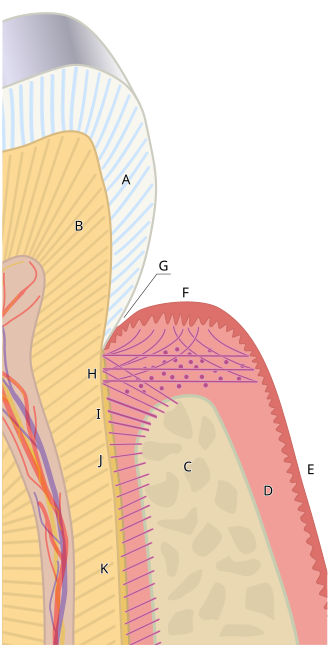
The periodontal ligament, commonly abbreviated as PDL, is a thin layer of connective tissue located between the root of a tooth and the bone of its socket. Although the word “ligament” is commonly associated with knees and other joints, the periodontal ligament is a specialized structure that helps hold each tooth securely in place.
The periodontal ligament contains strong fibers, blood vessels, nerves and living cells. Together, these structures help cushion teeth during biting and chewing, provide information about pressure and position, and support the biological processes that allow teeth to move.
What does the periodontal ligament do?
One of the periodontal ligament’s most important jobs is distributing pressure. When you bite into food, the ligament acts like a small suspension system between the tooth and jawbone. This helps prevent the full force of biting from being transferred directly to the bone.
The periodontal ligament also allows you to sense how much pressure is being placed on a tooth. This is one reason you can quickly detect something unexpectedly hard or notice when your bite feels different.
How does the periodontal ligament help move teeth?
Both braces and Invisalign move teeth by applying carefully controlled pressure. That pressure compresses the periodontal ligament on one side of a tooth and stretches it on the other.
These changes produce biological signals that tell the surrounding bone to remodel. Bone is gradually removed where space is needed and formed behind the moving tooth. This coordinated process allows the tooth and its root to move through the jawbone instead of simply tilting above the gumline.
Orthodontic tooth movement is intentionally gradual. Applying excessive force does not necessarily move teeth faster and can place unnecessary stress on the supporting tissues. Orthodontists plan and monitor these forces to move teeth safely and predictably.
Learn more about this process in Understanding Tooth Movement: The Science Behind Effective Braces Treatment.
Why can teeth feel sore after an adjustment?
Temporary tenderness after braces are adjusted or a new set of clear aligners is started is partly related to the periodontal ligament responding to pressure. The tissue and surrounding bone are beginning the remodeling process necessary for tooth movement.
This tenderness is usually temporary and often feels more noticeable when biting or chewing. Contact your orthodontist if discomfort is severe, continues longer than expected or is associated with another concern such as a damaged appliance.
What happens after orthodontic treatment?
When active treatment ends, the periodontal ligament and surrounding bone need time to adapt to the teeth’s new positions. Teeth also remain capable of moving throughout life.
A properly fitted retainer helps hold the teeth in position while these tissues adjust and provides continued protection against orthodontic relapse. Following the prescribed retainer schedule is an important part of maintaining results after braces or Invisalign.



.svg)

